

 ПН - ПТ 8:00-18:00


Nitrogen 5.0
 Fast delivery
-
Basic info:
-
English name
Nitrogen
-
CAS
7727-37-9
-
Hazard info
1066
-
Transport
"ADR Class 2, 1A"
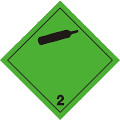
1A Subclass 2.2
Properties:
-
Molar mass
28.014
-
Gas density at 15°С/1,013 bar
1.691
-
Boiling point at 1,013 bar
-195.8
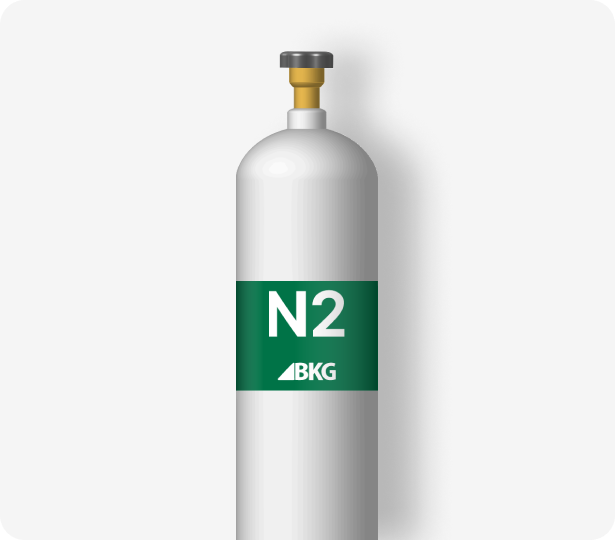
Options
- single-piece
2 l5 l10 l40 l — 150 bar
50 l (200) — 200 bar
- Monoblock(s)
12 × 40 l — 150 bar
12 × 50 l (200/300) — 200 bar
12 × 50 l (200/300) — 300 bar
- Cylinders 2 l, 5 l, 10 l (DIN 6 (W21.6x1/14'')) DIN 6 (W21.6x1/14'')
- Cylinder(s) 5 l, 10 l, 40 l, 50 l and monoblocks ( DIN 9 (G 3/4)) DIN 9 (G 3/4)
Brass two-stage for pure gases
Specs
| Nitrogen 5.0 | Nitrogen 5.5 | Nitrogen 6.0 | ||
|---|---|---|---|---|
| Composition | ||||
| N2 | % | ≥99,999 | ≥99,9995 | ≥99,9999 |
| Admixture | ||||
| O2 | ppmv | <5 | <2,5 | <0,5 |
| H2 | ppmv | <2 | <1 | <0,1 |
| CO | ppmv | <1 | <0,5 | <0,05 |
| CO2 | ppmv | <1 | <0,5 | <0,3 |
| CH4 | ppmv | <1 | <0,5 | <0,05 |
| H2O | ppmv | <3 | <1,5 | <1 |
Nitrogen 5.0: main properties, production, applications
Nitrogen (Nitrogenium) is an inert gas. Nitrogen is the fourth most common gas in the Solar System. The first three most common gases are hydrogen, helium and oxygen. This gas constitutes the largest part of the Earth's atmosphere by volume: more that 78%. Liquid nitrogen is obtained by low-temperature air separation. Liquefied nitrogen is then converted into the same element in gaseous form.Main properties
- Colorless and odorless gas;
- Much lighter than air;
- It may have asphyxiating effect on live organisms;
- Non-toxic;
- Poorly soluble in water.
Production
There are several ways to obtain pure nitrogen industrially:- liquid air fraction distillation. This method is based on the difference of nitrogen and oxygen boiling temperatures. In this method, purified liquefies air is cooled down and expanded. This method of nitrogen production is one of the most economically efficient.
- By chemical reaction between air and overheated coal;
- By gas fraction distillation.
Gaseous nitrogen may be of several purity degrees, which reflects the quantity of this gas in the total mixture. There are three of them: standard, high and ultra-high.
High purity, or Nitrogen 5.0. This degree stands for 99.999 % purity. That is, per 1 million of the mixture parts there are 10 parts containing oxygen in residue.
Pure nitrogen grade 5.0 is used in various industries:
- To create inert atmosphere for storage, production or transportation of highly oxidizable goods;
- To preserve closed vessels and lines;
- In scientific research;
- In iron and steel industry;
- In medicine. Liquid nitrogen is used for storing frozen tissues and blood;
- In chemical industry. Nitrogen is used for the production of varnishes, solvents and paints;
- Agricultural industry. Pure nitrogen is used for fertilizer production.
Applications
Gaseous nitrogen may be of several purity degrees, which reflects the quantity of this gas in the total mixture. There are three of them: standard, high and ultra-high.High purity, or Nitrogen 5.0. This degree stands for 99.999 % purity. That is, per 1 million of the mixture parts there are 10 parts containing oxygen in residue.
Pure nitrogen grade 5.0 is used in various industries:
- To create inert atmosphere for storage, production or transportation of highly oxidizable goods;
- To preserve closed vessels and lines;
- In scientific research;
- In iron and steel industry;
- In medicine. Liquid nitrogen is used for storing frozen tissues and blood;
- In chemical industry. Nitrogen is used for the production of varnishes, solvents and paints;
- Agricultural industry. Pure nitrogen is used for fertilizer production.
- Gas under pressure
- colorless
- odorless
- asphyxiant
- slightly lighter than air.
Nitrogen has a wide range of applications in various industrial sectors. For example:
- creating an inert atmosphere during transportation, storage
- metal processing under high temperature conditions
- metal pipe preservation
- chromatography (in medicine)
- research purposes
- enterprises working with food products and beverages
- metal processing in the metallurgical industry.
 Oil and Gas
  Chemical industry
  Electronics
  Power industry
  Analytics
  Car industry
  Medicine
  Food industry
  Nanotechnologies
  Research
  Metallurgy
 When transporting, pure nitrogen gas is classified as hazardous cargo. In its gaseous state, this substance can be transported by any type of ground transport (automobile, rail, or water). Inert gas is transported in steel cylinders under pressure. All containers must comply with strict GOST standards.
During transportation or storage, gas cylinders should not be heated, dropped, or subjected to any other impacts. Overheating or heavy impact creates a risk of explosion.
Nitrogen is not hazardous to the environment or ecology. It is not toxic. However, inhaling a large amount of the substance can be life-threatening. When working with nitrogen, it is necessary to monitor the oxygen level in the surrounding space. It should not be below 19%.
Can be transported by
- train
- truck
- ship